Why Translation Errors Are So Costly
In 2024, USCIS issued Requests for Evidence (RFEs) on nearly 12% of all family-based adjustment of status applications — and translation errors were among the top causes. An RFE doesn’t just delay your case. It can add months of waiting, additional filing stress, and in some cases, lead to outright denial.
The good news? Most translation-related RFEs are 100% preventable. Here are the biggest mistakes to avoid.
Mistake #1: Incomplete Translation
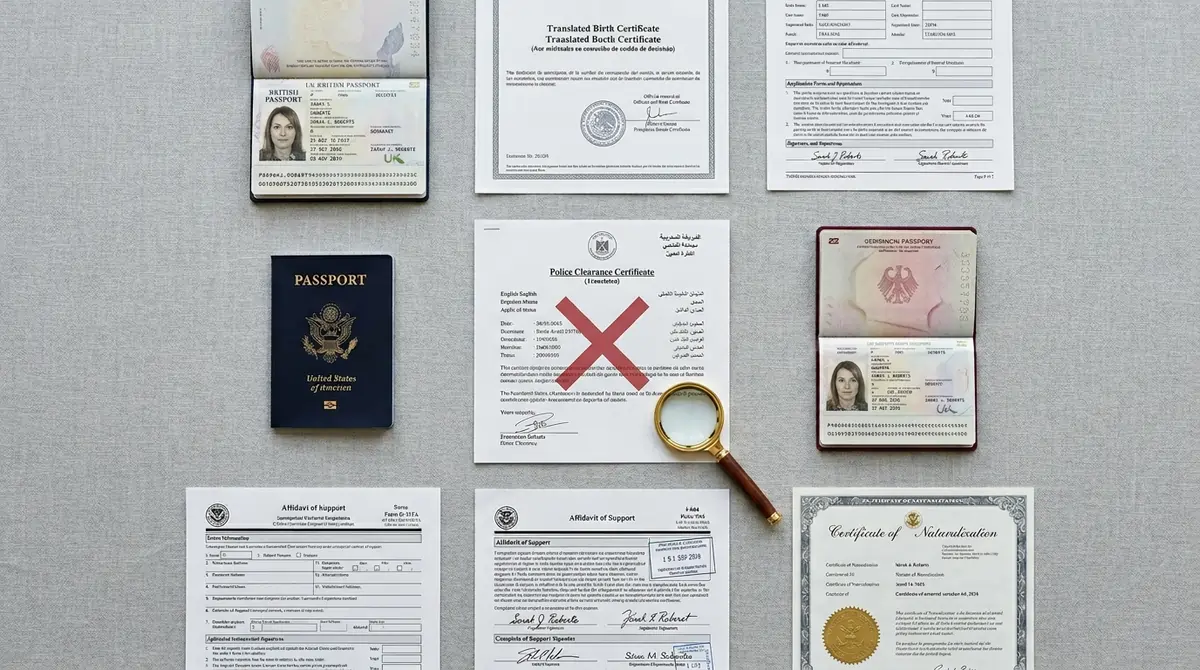
One of the most common errors is submitting a partial translation. USCIS requires every single word on the original document to be translated — including stamps, headers, footers, official seals, signatures, and marginal notes. Many applicants forget to translate the fine print at the bottom of a document or the notary’s seal text.
Mistake #2: Missing Certification Statement
A translated document without a signed Certificate of Accuracy is automatically non-compliant. The certification must include: the translator’s full name, address, phone number or email, a statement of competence in both languages, a statement of accuracy, and a handwritten or electronic signature.
Mistake #3: Using Machine Translation
USCIS officers are trained to spot machine-translated documents. Google Translate and similar tools produce literal, grammatically awkward translations that fail to capture legal terminology accurately. USCIS does not accept machine translations, and submitting one is a fast path to rejection.
Top 7 Translation Mistakes That Cause USCIS Rejections
- Incomplete translation — missing stamps, seals, or footer text
- No Certificate of Accuracy attached
- Using machine translation (Google Translate,DeepL)
- Translator is not fluent in both languages
- Names or dates are translated inaccurately
- Submittinga photocopy of a photocopy (poor image quality)
- Using notarization when certification was all that was needed (wasting money)
Mistake #4: Name and Date Discrepancies
Even a small difference in how a name is spelled between your passport and your translated birth certificate can trigger an RFE. Your translation must reflect the exact spelling from the source document — no anglicizing, abbreviating, or guessing.
How to Protect Your Application
The safest approach is to work with a specialized, USCIS-experienced translation service. At uscis-translations.com, every translation is reviewed by a qualified linguist and certified to USCIS standards — giving you confidence that your application will move forward without unnecessary obstacles.
Need USCIS-Approved Certified Translation?
Fast, accurate & USCIS accepted
- 24-Hour Turnaround
- 100% Acceptance Rate
- Notary Available