
The H1B Visa — Still the Most Sought-After Work Visa in the U.S.
For skilled foreign professionals, the H1B visa remains the primary pathway to working in the United States. It allows U.S. employers to hire foreign nationals in specialty occupations — roles that typically require at least a bachelor’s degree or its equivalent in a specific field. Technology, engineering, finance, architecture, medicine, and law are among the most common H1B industries, but the visa applies broadly to any qualifying specialty occupation.
The process is competitive, structured, and employer-driven. Understanding every step — and the costs attached to each — is essential before you begin.
H1B Visa Eligibility: The Basics
To qualify for an H1B visa, three conditions must be met:
- The position must be a specialty occupation — one that requires theoretical and practical application of a body of specialized knowledge, typically requiring a bachelor’s degree or higher in a related field
- The employer must be U.S.-based and willing to sponsor the visa and pay the prevailing wage for the role
- The applicant must hold the required degree (or its equivalent through education and experience) for the specific position
H1B visas are subject to an annual numerical cap: 65,000 visas for regular applicants, plus an additional 20,000 for applicants who hold a U.S. master’s degree or higher. When applications exceed the cap — which they consistently do — USCIS conducts a random lottery to select petitions for processing.
Step-by-Step: How to Apply for an H1B Visa
Step 1 — Secure an Employer Sponsor
The H1B process begins with your employer, not with you. You cannot self-petition for an H1B visa — a U.S.-based employer must agree to sponsor your application and file the necessary petitions on your behalf.
Your employer must be willing to:
- Classify the position as a specialty occupation
- Pay you the prevailing wage for the role and location
- File a Labor Condition Application and H1B petition with the relevant federal agencies
Most candidates secure sponsoring employers through direct hiring, recruitment agencies, or professional networks in their field.
Step 2 — Employer Files the Labor Condition Application (LCA)
Before filing the H1B petition, your employer must obtain an approved Labor Condition Application (LCA) from the U.S. Department of Labor. The LCA formally documents the terms of your employment — job title, duties, location, and salary — and includes the employer’s attestation that:
- They will pay the prevailing wage for the position in the relevant geographic area
- Hiring a foreign worker will not adversely affect the working conditions of U.S. workers in comparable roles
The DOL typically processes LCAs within 7 business days.
Step 3 — Employer Files Form I-129 with USCIS
With an approved LCA in hand, your employer files Form I-129 (Petition for Nonimmigrant Worker) with USCIS. This petition includes:
- Employer and employee information
- Details of the job offer and specialty occupation classification
- Evidence of your qualifications — educational credentials, work experience, and any required licenses
- The approved LCA
For applicants subject to the annual cap, petitions must be filed during the designated registration window (typically opening in March for an October 1 start date). USCIS conducts the H1B lottery after the registration period closes.
Step 4 — USCIS Reviews and Adjudicates the Petition
After filing, USCIS reviews the petition for completeness and eligibility. If additional documentation is needed, USCIS issues a Request for Evidence (RFE). Responding promptly and thoroughly to an RFE is critical — delays or inadequate responses can result in denial.
If the petition is approved, USCIS issues an I-797 Approval Notice, which authorizes your H1B status.
Step 5 — Consular Processing (If Applying From Outside the U.S.)
If you are outside the United States when your petition is approved, you must obtain the H1B visa stamp through consular processing at a U.S. embassy or consulate in your home country. This involves:
- Completing Form DS-160 (Nonimmigrant Visa Application)
- Scheduling and attending a visa interview
- Providing supporting documentation including your I-797 approval notice, passport, and educational credentials
Visa interview wait times vary significantly by country and time of year — factor this into your timeline planning.
Step 6 — Enter the United States and Begin Employment
Once your H1B visa is issued, you may travel to the United States and begin employment with your sponsoring employer on or after October 1 (the start of the federal fiscal year). Your H1B status is initially valid for three years and can be extended for an additional three years, for a maximum of six years.
After six years, H1B holders must generally leave the United States for at least one year before reapplying — unless they are in an active green card process, in which case extensions beyond six years may be available.
H1B Visa Costs: A Full Breakdown
H1B fees are primarily the employer’s responsibility, though it is important to understand the full cost structure. Note that fees are subject to change — always verify current amounts on the USCIS and DOL websites before filing.
| Fee | Who Pays | Approximate Amount |
|---|---|---|
| Labor Condition Application (LCA) | Employer | No filing fee (DOL) |
| I-129 Base Filing Fee | Employer | $730 |
| ACWIA Training Fee | Employer | $750–$1,500 (based on employer size) |
| Fraud Prevention and Detection Fee | Employer | $500 |
| Asylum Program Fee (new as of 2024) | Employer | $600 (small employers/nonprofits exempt) |
| Premium Processing (optional) | Employer or employee | $2,805 |
| DS-160 Visa Application Fee | Employee | ~$185 |
| Travel and relocation expenses | Employee | Varies |
Premium processing guarantees USCIS action within 15 business days and is commonly used by employers and candidates who need timely adjudication. It does not guarantee approval — only a faster decision.
The Role of Document Translation in H1B Applications
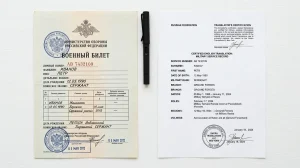
Foreign educational credentials submitted with an H1B petition must be in English. If your degree, transcripts, or other supporting documents are in a language other than English, certified English translations are required.
This is a requirement that is frequently overlooked until late in the process. USCIS applies the same translation standards to H1B supporting documents as it does to all immigration filings: every document must be completely and accurately translated, accompanied by a signed Certificate of Translation Accuracy from a competent translator.
Credential evaluation services — which are often required to assess whether a foreign degree is equivalent to a U.S. bachelor’s degree — also typically require certified translations of the underlying documents.
Advantages of the H1B Visa
Access to the U.S. job market. The H1B opens the door to employment with U.S.-based companies across every major industry, including the world’s leading technology, finance, and healthcare organizations.
Prevailing wage protections. H1B regulations require employers to pay foreign workers the prevailing wage for the role and location — providing a wage floor that benefits H1B holders.
Dual intent. Unlike many nonimmigrant visas, the H1B is a “dual intent” visa, meaning holders can pursue permanent residency (a green card) while maintaining H1B status. This makes it a viable long-term pathway for those who wish to remain in the United States.
Family inclusion. H1B holders can bring their spouse and unmarried children under 21 to the U.S. on H-4 dependent visas. H-4 spouses of H1B holders with approved I-140 petitions may be eligible for work authorization.
Disadvantages of the H1B Visa
Annual lottery uncertainty. The H1B cap is consistently oversubscribed, and selection is by lottery. Highly qualified candidates with strong job offers may not be selected, introducing significant uncertainty into career planning.
Employer dependency. H1B status is tied to a specific employer. If employment ends — voluntarily or otherwise — the visa holder has a limited grace period to find a new sponsoring employer or change status before being required to depart the U.S.
Six-year time limit. Without an active green card process, H1B holders face a hard six-year maximum. This creates pressure to initiate permanent residency applications early in the H1B period.
Processing timelines and RFE risk. USCIS adjudication timelines vary, and RFEs — which require additional documentation and delay processing — are common. Incomplete or poorly documented petitions increase this risk substantially.
Frequently Asked Questions
Can my employer file an H1B for me if I am already in the U.S. on a different visa? Yes. H1B petitions can be filed as a change of status for individuals already in the U.S. on a valid nonimmigrant visa. Consular processing is only required for applicants outside the United States.
What happens if my H1B petition is denied? Your employer can file a motion to reopen or reconsider, or refile with additional documentation. If you are in the U.S. on another visa, your existing status remains valid until it expires.
Do my foreign educational credentials need to be translated for an H1B petition? Yes. Any foreign-language educational documents — degrees, transcripts, diplomas — submitted with an H1B petition must be accompanied by complete certified English translations.
Is premium processing worth the cost? For candidates with time-sensitive start dates, expiring status, or other deadline pressures, premium processing is generally worth the expense. It does not increase the likelihood of approval but significantly reduces uncertainty around timing.
Conclusion: Preparation Is the Foundation of a Successful H1B Application
The H1B visa is a life-changing opportunity — but it is also a highly structured, documentation-intensive process where thoroughness at every step directly affects outcomes. Finding the right employer sponsor, meeting USCIS filing requirements, and ensuring every supporting document — including translated educational credentials — meets federal standards are all within your control.
What is not within your control is the lottery. What is within your control is submitting a petition that gives USCIS no reason to issue an RFE or denial once your number is called.
Get a Free Quote for Certified Translation of H1B Supporting Documents →
Need certified English translations of educational credentials or other foreign-language documents for your H1B petition? Visit our USCIS Certified Translation Services page, connect via live chat on our website, or email us at support@uscis-translations.com.