Why religious documents are used in immigration cases
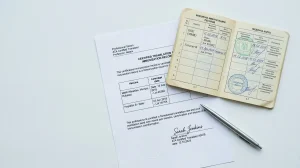
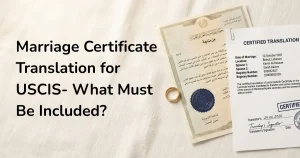
Religious certificates — including baptism records, confirmation certificates, church marriage records, and christening documents — are often used in immigration cases when official civil registry records are unavailable, damaged, or do not exist. In many countries, particularly in Latin America, the Philippines, parts of Africa, and Eastern Europe, church records predate or supplement government records and are accepted by USCIS as secondary evidence of birth, marriage, or identity.
When religious document translations are needed
Situations where religious records are used in USCIS applications
- Birth Certificate Unavailable — Baptism records used as secondary evidence of birth date and place
- Civil Marriage Certificate Missing — Church marriage records used to establish the marital relationship
- Identity Verification — Church records confirming full name and parentage when civil records are incomplete
- Nationality and Origin Documentation — Religious records confirming the applicant’s country of birth
- Adoption Cases — Church christening records sometimes used alongside civil adoption certificates
- Historical Immigration Cases — For elderly applicants whose birth records may only exist in church archives
Countries where church records commonly supplement civil records
| Country / Region | How church records are used |
|---|---|
| Philippines | Catholic baptismal records widely accepted by USCIS as birth evidence |
| Mexico | Parish records from the Catholic Church predate many civil registries and remain valid |
| Nigeria | Church of Nigeria and Catholic records used when local civil registries are incomplete |
| Poland / Eastern Europe | Catholic and Orthodox church records from before WWII may be the primary documents available |
| Guatemala / Honduras | Rural parishes maintain records for communities with limited civil registry access |
| India (Catholic communities) | Goa and other Catholic communities maintain extensive parish records accepted by USCIS |
What must be translated in a baptism or church record
Required translation elements
- Full name of the individual baptized or confirmed
- Date and place of the religious ceremony
- Names of both parents and godparents if listed
- Name and location of the church or parish
- Name of the officiating priest, minister, or religious official
- Book, volume, page, and entry reference numbers
- Any marginal notations or amendments made to the original entry
- All official stamps, signatures, and certification statements
Using a baptism certificate as secondary evidence for USCIS
What USCIS requires when submitting secondary evidence
When submitting a baptism certificate as secondary evidence of birth, USCIS requires it to be accompanied by a certified English translation and a written explanation of why the primary civil birth certificate is unavailable. Our team can help you prepare both the certified translation and a supporting statement for your USCIS submission.
Languages we translate religious documents from
- Latin
- Spanish
- Portuguese
- French
- Polish
- Tagalog
- Igbo
- Yoruba
- Italian
- Ukrainian
- Romanian
- Arabic
Get your religious document translated
Upload your baptism certificate, church marriage record, confirmation document, or other religious record at uscis-translations.com and receive a USCIS-accepted certified translation within 24–48 hours.
Need USCIS-Approved Certified Translation?
Fast, accurate & USCIS accepted
- 24-Hour Turnaround
- 100% Acceptance Rate
- Notary Available