Introduction
Global business no longer forgives communication errors. In 2026, with cross-border commerce accelerating and regulatory scrutiny tightening, one mistranslated document can cost your company a contract, a visa approval, or an entire market opportunity.
Machine translation tools have become faster and more sophisticated — but sophistication is not the same as accuracy. For businesses navigating immigration paperwork, legal agreements, or international marketing campaigns, the gap between “good enough” and “certified correct” is where reputations are won or lost.
This guide breaks down why professional translation is not an optional upgrade — it’s a business-critical investment.
The Hidden Risks of Machine Translation in 2026
1. Accuracy Failures Where It Counts Most
Modern AI translation tools like Google Translate and DeepL have improved dramatically. But they still struggle with the very elements that matter most in professional contexts: contextual meaning, idiomatic expressions, and domain-specific terminology.
A single word in Spanish can carry multiple meanings depending on region, formality, and context. In a legal contract or an immigration document, that ambiguity doesn’t just create confusion — it creates liability. Machine translation has no accountability framework. When it gets something wrong, your business absorbs the consequences.
2. Cultural Blind Spots That Damage Your Brand
Language is culture. When you translate content without cultural intelligence, you risk producing messaging that feels tone-deaf, inappropriate, or outright offensive to your target audience.
Machine translation tools operate on linguistic pattern matching. They don’t understand regional dialects in Latin America versus Spain, the formality expectations of a B2B audience in Mexico City, or the cultural sensitivities that vary across Spanish-speaking markets. A single culturally misaligned campaign can undermine years of brand-building.
3. Legal and Regulatory Exposure
For businesses and individuals submitting documents to federal immigration agencies — including USCIS in the United States or IRCC in Canada — translation accuracy is not a preference. It is a legal requirement.
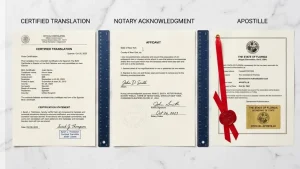
USCIS mandates that all foreign-language documents submitted with immigration applications be accompanied by a full English translation, along with a signed certification attesting to the translation’s accuracy. A mistranslated birth certificate, marriage record, or financial document can result in:
- Application rejection or delays
- Requests for Evidence (RFEs) that extend processing timelines
- In serious cases, findings of misrepresentation
The financial and personal cost of these outcomes far exceeds the cost of hiring a certified professional translator from the outset.
4. No Quality Control, No Accountability
Machine translation delivers output. It does not deliver assurance. There is no review process, no subject-matter expertise, and no professional standing behind the result. Errors can pass undetected until they surface in the worst possible context — during a legal review, a regulatory submission, or a client presentation.
For businesses that value precision and professionalism, this is an unacceptable risk.
What Professional Translation Actually Delivers
Contextual Precision
Certified professional translators don’t just convert words — they transfer meaning. They understand how context shapes language, how tone shifts between formal and informal registers, and how the same concept must be expressed differently depending on the audience and purpose.
This is the difference between a document that technically says the right words and one that communicates the right message.
Cultural Competency Built Into Every Translation
Professional translators are not just bilingual — they are bicultural. They understand the regional nuances, idiomatic conventions, and audience expectations that vary across Spanish-speaking markets in the U.S., Latin America, and Spain. This expertise ensures your content resonates rather than alienates.
Certified Compliance for Official Submissions
For USCIS document translation, professional services provide the certification statements required by federal agencies. Each translation is accompanied by the translator’s credentials, a statement of accuracy, and — where required — notarization. This ensures your submission meets every procedural requirement before it reaches a reviewer’s desk.
Consistent Brand Voice Across Languages
Your brand has a voice. Professional translators preserve it. Whether you’re localizing a website, adapting marketing materials, or translating a corporate communications package, a skilled translator ensures your brand sounds like itself — in every language.
Documented Quality Assurance
Reputable professional translation services use multi-step quality review processes: initial translation, editorial review, and final proofreading. This structured approach catches errors before they reach the client — and gives you a paper trail of accountability that machine tools simply cannot provide.
When Professional Translation Is Non-Negotiable
| Use Case | Why Professional Translation Is Required |
|---|---|
| USCIS / IRCC Document Submissions | Federal certification requirements; errors trigger rejections or RFEs |
| Legal Contracts & Agreements | Mistranslations create unenforceable terms or legal disputes |
| Marketing & Advertising Campaigns | Cultural missteps damage brand equity in new markets |
| Website Localization | Poor UX and SEO performance in international markets |
| Medical & Technical Documentation | High-stakes accuracy requirements with zero margin for error |
| Financial Reports & Compliance Filings | Regulatory accuracy requirements with legal consequences |
Machine Translation vs. Professional Translation: A Direct Comparison
| Factor | Machine Translation | Professional Translation |
|---|---|---|
| Speed | Instant | 24–72 hours (project-dependent) |
| Cost | Low upfront | Higher upfront, lower risk-adjusted cost |
| Accuracy | Moderate (general content) | High (including specialized content) |
| Cultural nuance | Limited | Expert-level |
| Legal certification | Not available | Included where required |
| Accountability | None | Full professional accountability |
| Quality assurance | None | Multi-stage editorial review |
The Real Cost Equation
Businesses that choose machine translation for cost savings often discover they’ve deferred — not eliminated — the expense. A rejected USCIS application means refiled fees, extended processing delays, and potential legal consultation costs. A poorly localized marketing campaign means wasted media spend. A mistranslated contract means dispute resolution and possible litigation.
Professional translation is not a premium service. It is risk management.
Conclusion: Precision Is a Competitive Advantage
In 2026, global markets are more accessible than ever — and more competitive than ever. The businesses that earn trust in international markets are those that communicate with clarity, cultural respect, and professional precision.
Whether you need certified Spanish-to-English document translation for USCIS submissions, localized content for a Spanish-speaking customer base, or multilingual support for a cross-border marketing strategy, professional translation gives you the accuracy and credibility that machine tools cannot.
Your message deserves to be understood — exactly as you intended it. Partner with certified professional translators who bring linguistic expertise, cultural intelligence, and documented accountability to every project.
[Get a Free Quote for Certified Translation Services →]
.Looking for USCIS-certified translation services? Visit uscis-translations.com to learn how we help businesses and individuals meet federal translation requirements with accuracy and confidence.